Skip to content

Table of Contents
In modern vehicle safety management, speed limiters and collision avoidance systems are two critical technologies designed to reduce accidents, protect pedestrians, and improve fleet compliance. While both aim to enhance safety, they serve very different purposes and operate using different principles.
This article explains the differences between speed limiters vs collision avoidance systems, their advantages, and how to choose the right solution for your fleet.
What Is a Speed Limiter?
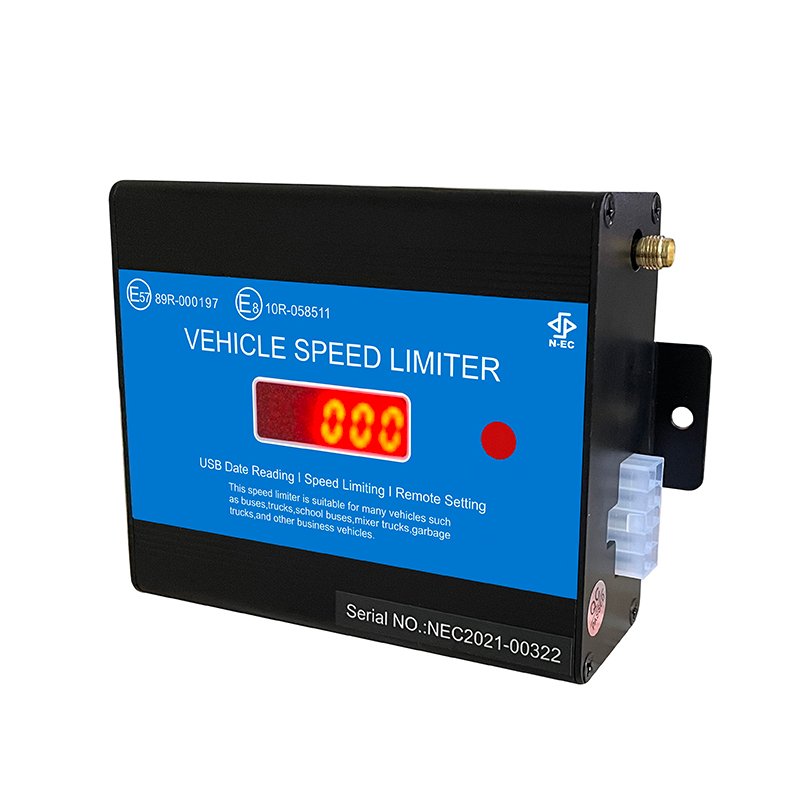
A speed limiter is an electronic or mechanical device that restricts the maximum speed of a vehicle. Once the preset speed threshold is reached, the system automatically prevents the vehicle from accelerating further.
How Speed Limiters Work
Speed limiters typically connect to the vehicle’s ECU, CAN bus, or throttle control system. When the vehicle reaches the programmed speed (for example 60 km/h or 80 km/h), the system reduces engine power or fuel supply to maintain the speed limit.
Key Benefits of Speed Limiters
Prevent speeding and reckless driving
Improve fuel efficiency
Reduce accident severity
Ensure compliance with government regulations (UNECE R89, R118, etc.)
Lower insurance and maintenance costs
Typical Applications
Commercial trucks and buses
Forklifts and warehouse vehicles
Mining and construction equipment
School buses and public transport fleets
What Is a Collision Avoidance System?
A collision avoidance system (CAS) is an advanced safety technology that detects obstacles, pedestrians, or other vehicles and warns the driver or automatically intervenes to prevent collisions.
How Collision Avoidance Systems Work
Collision avoidance systems use multiple sensors such as:
Cameras (AI vision)
Radar or LiDAR
Ultrasonic sensors
GPS and telematics
Driver monitoring cameras
The system analyzes the environment in real time and triggers alerts, braking, or steering assistance when a collision risk is detected.
Key Benefits of Collision Avoidance Systems
Prevent pedestrian accidents
Reduce blind-spot incidents
Improve situational awareness
Enable ADAS and smart fleet safety
Provide real-time safety analytics
Typical Applications
Forklift pedestrian safety systems
Autonomous or semi-autonomous vehicles
Logistics warehouses
Smart cities and smart fleets
Heavy-duty industrial vehicles
Speed Limiter vs Collision Avoidance Systems: Main Differences
| Feature | Speed Limiter | Collision Avoidance System |
|---|---|---|
| Primary Purpose | Limit vehicle speed | Prevent collisions |
| Technology | ECU / throttle control | AI cameras, radar, sensors |
| Active Intervention | Limits speed only | Warns, brakes, or steers |
| Real-Time Environment Detection | No | Yes |
| Regulatory Compliance | Often mandatory | Usually recommended but not mandatory |
| Cost | Low to medium | Medium to high |
| Complexity | Simple | Advanced AI & sensor integration |
Which System Is Better?
The answer depends on your safety goals:
Choose a Speed Limiter If:
You need to comply with regulations
You want to reduce speeding violations
You want a low-cost safety solution
You manage large commercial fleets
Choose a Collision Avoidance System If:
Pedestrian safety is critical
Vehicles operate in crowded warehouses
You want smart AI safety analytics
You aim for Industry 4.0 or smart logistics
Why Many Fleets Use Both Systems
Modern safety strategies combine speed limiters + collision avoidance systems to create a layered safety architecture:
Speed limiter → controls driver behavior
Collision avoidance system → prevents accidents in real time
This dual approach significantly reduces fatal accidents, injuries, and operational risk.
Future Trends: Intelligent Safety Systems
The future of fleet safety lies in integrated AI-based systems, including:
Smart speed governors with telematics
AI pedestrian detection
Predictive collision analytics
Autonomous braking systems
Cloud fleet safety dashboards
Regulators and insurers are increasingly encouraging fleets to adopt combined safety technologies, not just single-point solutions.
Conclusion
Both speed limiters and collision avoidance systems play essential roles in modern vehicle safety. Speed limiters control how fast a vehicle can go, while collision avoidance systems actively prevent accidents using intelligent sensing and AI technology.
For maximum safety and compliance, fleet operators should consider deploying both systems together to create a comprehensive safety ecosystem.