Skip to content

Table of Contents
Fleet owners and managers in the trucking world are always looking for smart ways to boost profits. If you’re searching for “the ROI of installing speed limiters for commercial vehicles,” you probably want hard numbers on whether these devices pay off. This means figuring out the return on investment—how much money you get back compared to what you spend. In this guide, we’ll break down the costs, savings, and real math behind speed limiters, especially now in late 2026 after the federal mandate got pulled. We’ll use fresh data and examples to help you decide if they’re right for your rigs. By the end, you’ll have a clear picture to plug into your own budget.
Understanding ROI for Speed Limiters
ROI stands for return on investment. It’s a simple way to see if a tool like a speed limiter is worth it. The basic formula is: (Net Savings – Initial Cost) / Initial Cost x 100. This gives you a percentage showing how much you gain over time.
For commercial vehicles like semis or delivery trucks, speed limiters cap top speeds to something safe, like 65 or 68 mph. They hook into the engine to prevent going faster, cutting risks and waste. Even though the FMCSA dropped the rule in July 2025 due to data gaps, many fleets still install them voluntarily. Why? They save on fuel, repairs, and more—often paying for themselves in months.
Studies show trucks with limiters can cut crash severity by 20%, but the real draw is the cash savings. If your fleet logs high miles, the ROI can hit 200% or more in the first year alone.
Breaking Down the Costs of Installation
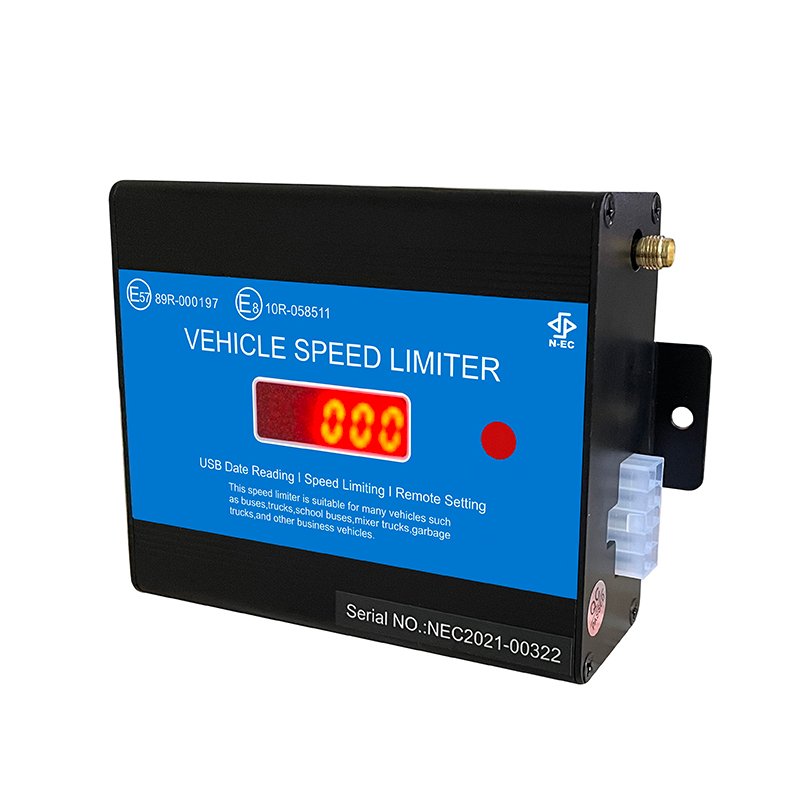
First, let’s talk upfront costs—these are key to your ROI calc.
- Device and Setup: Basic speed limiters run $200 to $500 per truck, depending on if they’re standalone or tied to telematics. For a 20-truck fleet, that’s $4,000 to $10,000 total.
- Labor and Downtime: Installation takes 1-2 hours per vehicle, so add $100-200 in shop time. Minimal downtime if done during routine checks.
- Training: A quick session for drivers costs little—maybe $500 fleet-wide to explain benefits.
Total starting investment? Around $300-700 per vehicle. No big ongoing fees unless you add fancy monitoring.
Major Savings That Drive High ROI
Speed limiters shine in cutting daily expenses. Here’s where the money adds up, based on 2025 data from fleets and studies.
- Fuel Efficiency Gains High speeds guzzle diesel. Dropping from 70 to 65 mph can save 5-10% on fuel— that’s about 0.5 to 1 mpg better. For a truck doing 100,000 miles a year at $4 per gallon, that’s $1,000 to $2,000 saved per vehicle annually. Recent reports confirm this as a top fuel-saver for fleets.
- Reduced Maintenance Expenses Slower speeds mean less stress on tires, brakes, and engines. Expect 10-15% lower repair bills, or $500-1,000 per truck yearly. One study noted extended part life from steady pacing, cutting downtime too.
- Lower Insurance Rates Insurers offer 5-15% discounts for safety tech like limiters, especially with telematics proof. For a fleet paying $10,000 per truck in premiums, that’s $500-1,500 off each. Some programs give up to 20% for strong safety data. Fewer crashes mean no big claims, boosting long-term savings.
- Fewer Tickets and Compliance Wins Automatic speed caps dodge fines—up to $10,000 per pop. Plus, better records during audits save on legal hassles.
Add it up: For one truck, yearly savings could reach $2,000-4,500. Multiply by your fleet size, and the ROI stacks quick.
Calculating ROI: A Real Fleet Example
Let’s crunch numbers for a small fleet of 10 semis, each running 80,000 miles yearly.
- Initial Cost: $5,000 total ($500 per truck installed).
- Annual Savings:
- Fuel: $1,500 per truck x 10 = $15,000
- Maintenance: $700 per truck x 10 = $7,000
- Insurance: $800 per truck x 10 = $8,000
- Total Savings: $30,000
Net Gain First Year: $30,000 – $5,000 = $25,000 ROI: ($25,000 / $5,000) x 100 = 500%
Payback Period: Just 2 months ($5,000 / $30,000 x 12 months). That’s faster than many tech upgrades. For larger fleets, scale it up— a 50-truck operation might see $150,000 in savings.
In a 2026 case from a midwest carrier, limiters at 65 mph trimmed fuel by 7%, paying back in under six months while dropping accidents 15%.
Factors That Affect Your ROI
Not all fleets see the same results. High-mileage long-haul trucks get the biggest bang, while local delivery might see less. Fuel prices matter—higher costs mean quicker payback. Pair limiters with GPS for adaptive speeds, bumping savings another 5%
Downsides? Slight trip delays (5-10% longer at lower caps), but route tweaks offset it. Drivers might resist at first, so involve them early.
Steps to Implement and Maximize ROI

- Pick the Right System: Go for adjustable limiters with data tracking—under $400 each.
- Test Small: Install on 5-10 vehicles, track savings for 3 months.
- Train and Monitor: Show drivers the safety perks; use reports to fine-tune.
- Shop Insurance: Ask for discounts post-install—many carriers auto-apply them.
- Track Progress: Use spreadsheets or software to log ROI monthly.
With the mandate off the table, this is a low-risk move for proactive fleets.
Answering Related Questions
You might also wonder:
- What’s the average payback period? 3-6 months for most fleets, based on fuel alone.
- Do speed limiters hurt productivity? Minimal impact—focus on efficient routing to balance it.
- Are they required in 2025? No federal rule, but some states push limits; voluntary for ROI wins.
- How do they work with EVs? Great—they extend battery range by controlling speeds.
Final Take: Is It Worth It?
Yes, the ROI of speed limiters for commercial vehicles often tops 200-500% in year one, thanks to fuel, maintenance, and insurance cuts. In 2026’s volatile market, they’re a no-brainer for cost control and safety. Start with a quote from a trusted supplier, run your numbers, and watch the savings roll in. Your bottom line will improve, and so will road safety. If you need custom calcs, drop a comment or consult a fleet expert.